How to Continuously Operate Timelapse Camera by Solar Panel
In the construction and project development industry, time-lapse videos are not only used for visual progress reporting but are also an invaluable media asset for attracting investors and customers.
However, there is a practical challenge that always troubles construction units: How to keep cameras operating continuously day and night for 2-3 years in tricky locations such as the top of hundred-meter-tall tower cranes, or in the middle of massive construction sites without grid power? Running hundreds of meters of bare electrical wire carries a very high risk, easily causing short circuits or being broken by excavators and cranes.
That is exactly why many project managers choose to operate timelapse camera by solar panel. But for this system to stay healthy through thousands of sunny and rainy days, we need a smart installation and operation strategy.
1. Independent Power Source: Eliminating the Fear of Data Loss
Imagine the solar energy system as a miniature power station, serving exclusively for your camera cluster. Its biggest benefit is complete autonomy. When the construction site is forced to have rolling blackouts to accommodate construction or machinery relocation, your camera continues to record. The visual flow of your project will not be interrupted for even a second, ensuring the integrity of your data assets from groundbreaking to topping out.
2. Smart Installation: "Automating" Maintenance
A good system is one that does not require constant human intervention. Instead of discussing complex technical specifications, the secret lies in very practical details:
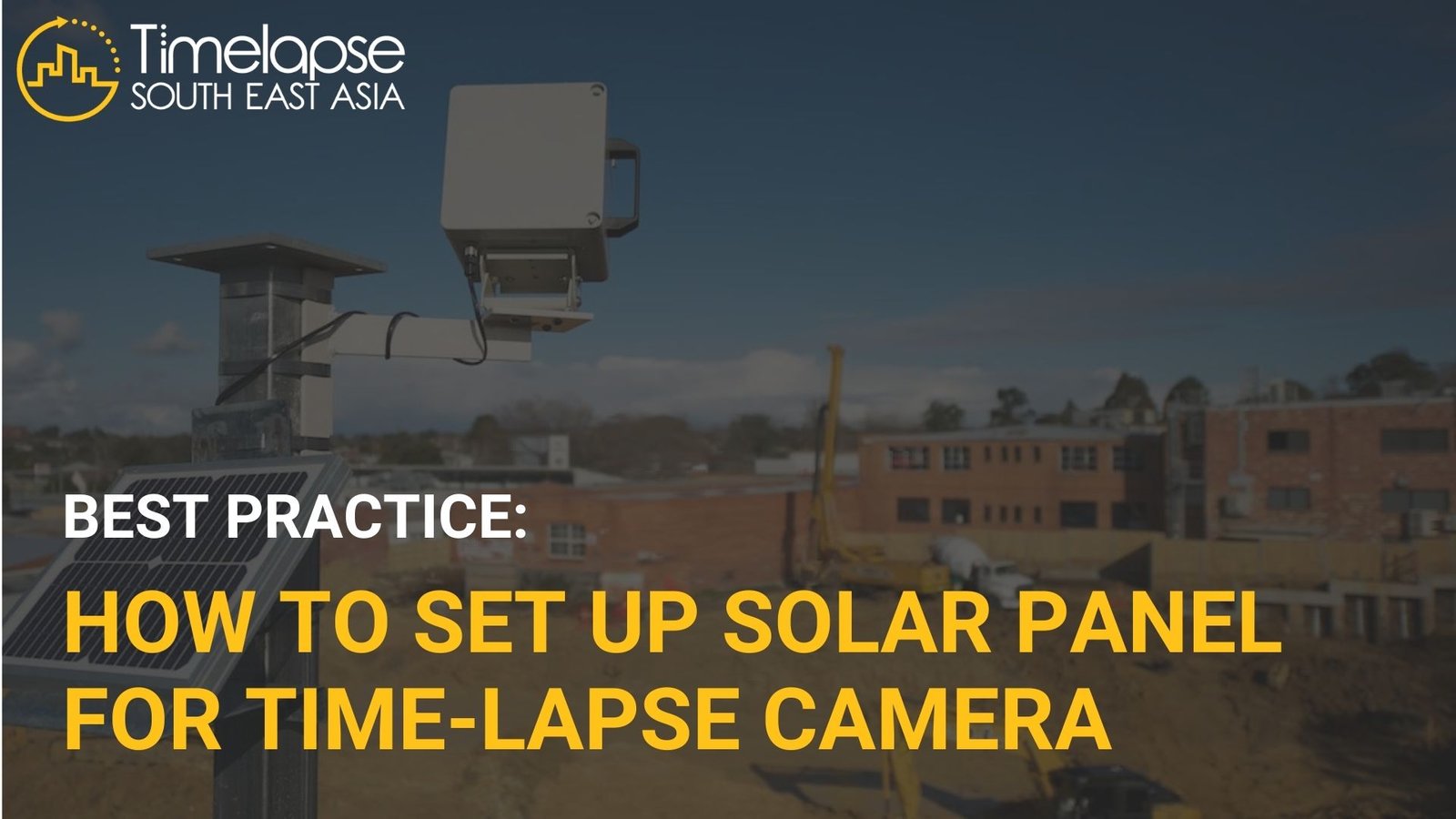
- Self-cleaning installation angle: Construction site dust is the number one enemy that reduces the solar panels light absorption capability. Instead of installing it completely flat, the panel always needs to be placed at a slight incline (about 10 – 15 degrees). This small slope allows rainwater to automatically wash away dirt, maintaining power collection efficiency without the need to send workers climbing up for dangerous cleaning.
- Rugged design: Harsh sunlight, salt frost, or heavy storms can all damage electronic equipment. All cables, junction boxes, and solar panels must be completely sealed to be waterproof and dustproof, combined with a stainless steel frame to withstand strong gusts of wind at high altitudes.
3. Remote Alerts
You certainly do not want to wait until the camera shuts down and data is lost for several days before realizing the system is out of power. A standard system must feature:
- Real-time reporting of the solar power capacity charging the camera.
- Reporting of battery status to a phone or computer.
Similar to a cars fuel gauge, this system will automatically send warning text messages or emails to the technical team when the power reserve drops low (e.g., below 20%). Thanks to this, we can proactively inspect and resolve issues before the camera loses power.
4. Weaknesses of Solar Panels
First – Poor performance in bad weather: Solar panels only generate electricity when there is light. If the sky is heavily overcast for consecutive days, the energy collected will not be enough to compensate for the power consumed by the camera.
Second – Lifespan degradation due to temperature: Many people mistakenly believe that the stronger the sun, the better the battery charges. In reality, when the outdoor temperature is too high (over 40°C), the power conversion efficiency of the panel decreases. Worse, high temperatures inside the glass dome/technical box are the number one enemy that damages the internal storage battery/accumulator.
Third – The invisible enemy named Construction Dust: Cement dust and floating sand tightly adhering to the panels surface will create a light-blocking screen. Without a cleaning mechanism, the system can lose its power-harvesting capability after just a few months.
5. Solving the Energy Problem by Region in Vietnam
Solar energy depends on the weather, and each regions climate has its own way of challenging equipment. A good solution must adapt to local conditions:
- In the North: Winter and spring often have overcast skies and prolonged rain. The solution here is to equip an extra-large accumulator/storage battery, capable of powering the camera to operate in the background for 7-10 days even without seeing the sun. Alternatively, the photographing frequency can be reduced to allow the camera to operate longer.
- In the Central region: Extremely intense sunlight and frequent storms. The equipment needs an excellent thermal insulation box to prevent battery degradation due to overheating, and the mounting frame must be securely reinforced at the base to prevent it from being blown away by the wind.
- In the South: Abundant sunlight but frequent heavy downpours and lightning. The top priority is a safe lightning protection system, and the joints must be absolutely waterproof.
Important Checklist: Should You Choose Wired or Solar Power?
Before making a decision, you can quickly consider the following 5 questions:
- Is the installation location easy and safe for direct electrical wiring?
- How long is the project timeline? (If over 1 year, solar power is always more optimal).
- Does the construction area experience frequent power outages?
- Are there many heavy machines moving around that could easily break the cables?
- Do you choose to make a one-time investment in good equipment to sleep soundly, or accept the high labor costs for continuous repairs and cable splicing over 2 years?
Introducing Timelapse SEAs Timelapse Camera Solution
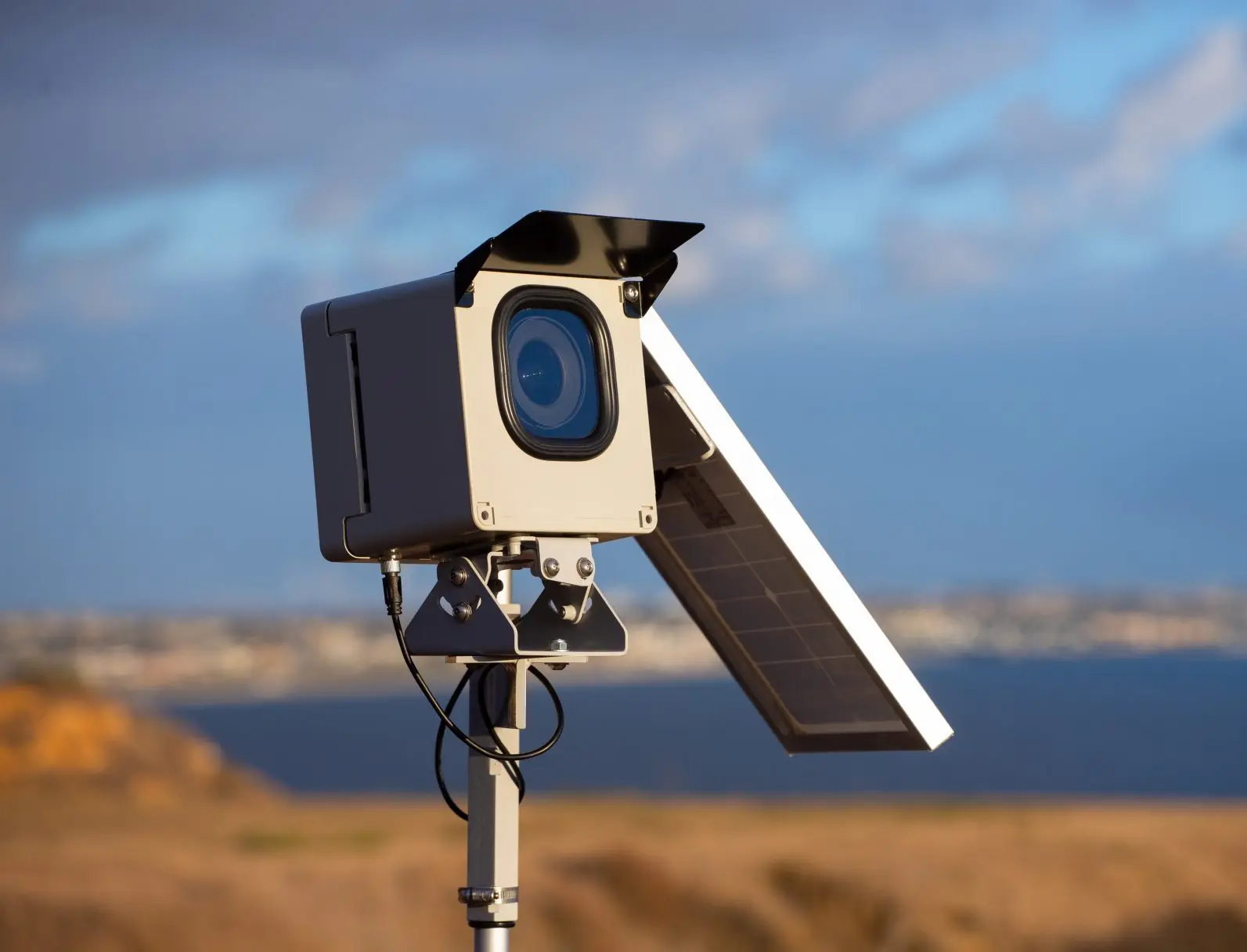
Deeply understanding the pain points in maintaining surveillance equipment at mega construction sites, Timelapse SEA has researched and standardized the Solar Powered Timelapse Camera system to comprehensively solve the most demanding problems:
Guaranteeing 2 years of continuous data: The system operates 100% independently, completely eliminating the risk of image interruption due to grid power loss or broken site cables.
Tailor-made for the climate: Designed to suit Vietnam’s climate, ensuring stable camera operation in all weather conditions.
Easy management: Built-in software platform, reporting real-time energy status directly to the Manager’s phone.
Do not let a minor grid failure disrupt the valuable footage of a mega-project. If you are looking for a professional solution to operate timelapse camera by solar panel stably in all weather conditions, please hit the below button to reach us out. Our team of experts is ready to consult and design an energy plan tailored to the specific characteristics of your construction site!